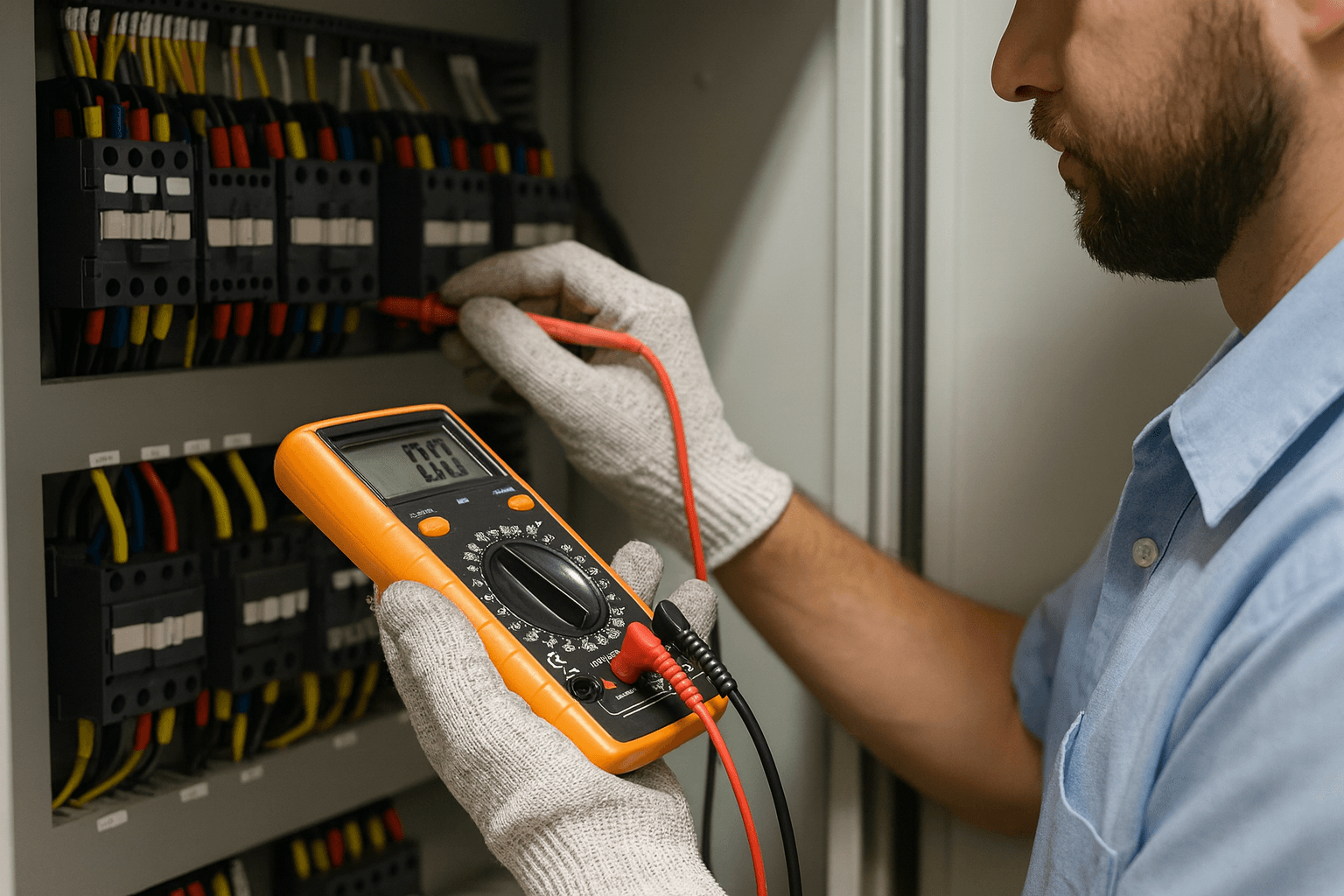
What a Panel Upgrade Involves
A panel upgrade replaces your home's main electrical service—the brain of your home's power system. If you're still running on a 100A or 150A service from the 1980s or earlier, your panel was designed for a fraction of today's electrical demands. Modern homes in Buckhead, Dunwoody, Virginia-Highland, and beyond need 200A service to safely handle EV chargers, heat pumps, induction cooktops, and whole-home air conditioning running simultaneously.
We start with a detailed load assessment—examining your current panel, evaluating your home's square footage, and discussing your plans for new appliances. If you're installing an EV charger, we confirm you need a dedicated 40–50A circuit. Adding a heat pump requires similar dedicated capacity. Modern NEC (National Electrical Code) standards, which Georgia Power and Atlanta Building Inspections enforce, require your panel to accommodate the sum of these loads without exceeding 80% capacity.
Our team pulls permits through Atlanta's building department, coordinates with Georgia Power for the meter and service upgrade, and schedules your installation. We work with Georgia Power representatives to safely disconnect your old service, remove the outdated panel, install a new 200-amp main breaker panel (typically a Square D or Eaton unit), and restore power. The entire process—from inspection to final city sign-off—takes 1–2 weeks of coordinating, with the actual installation day running 4–6 hours.
Why a 200A Panel Matters Today
Homes built before 2000 typically came with 100A or 150A service, which worked fine for electric stoves, heating, and a handful of air conditioning units. Today's homes demand far more. An EV charger alone draws 30–50A; a modern heat pump pulls 25–40A; a whole-home induction cooking setup requires 40–50A. Run an air conditioner and a heat pump simultaneously, and a 100A panel immediately overloads—you trip breakers constantly, and your appliances wear out prematurely.
A 200A service provides the capacity and flexibility to manage these loads without nuisance outages. Your panel has 40+ available breaker slots instead of 20–24, meaning you can add dedicated circuits for future renovations, whole-home surge protection, backup generators, or technologies you haven't even imagined yet. This is especially important for homeowners in fast-growing Atlanta neighborhoods like Decatur or areas with older homes like historic Virginia-Highland, where renovation and modernization are common.
Beyond capacity, a modern 200A panel meets current Atlanta Building Code and NEC standards. It includes proper main bonding jumpers, updated grounding specifications, and arc-fault (AFCI) and ground-fault (GFCI) protection requirements that protect against fire and electrical shock. Your insurance company may lower your homeowner premiums, and future buyers see the upgrade as a major asset—code-compliant, inspected panels increase home value.
Cost Factors and Installation Timeline
Permitting & Utility Work: 1–2 weeks
We pull building permits, notify Georgia Power, and coordinate the meter and service upgrade. Georgia Power may charge a separate fee (typically $100–$500 depending on your location and whether new conduit is needed).
Installation Day: 4–6 hours
We work with a Georgia Power representative to safely disconnect, remove your old panel, install the new one, test all breakers and connections, and restore power.
Inspection: 1–2 days
Atlanta City Inspections verifies the installation and confirms code compliance. We schedule this and handle any follow-up items.
Rebates & Incentives
Georgia Power occasionally offers $250–$500 rebates for panel upgrades. We help you apply and maximize available incentives.
Typical Cost Breakdown ($1,500–$3,500)
- 200A main panel & breakers: $600–$1,000
- Labor (installation, testing, coordination): $800–$1,500
- Permits & inspections: $100–$300
- Georgia Power meter/service fee: $100–$500
- Total: $1,600–$3,300
When You Should Upgrade Your Panel
Your panel may be ready for an upgrade if: you're planning to install an EV charger and your panel doesn't have a spare 40–50A breaker, you frequently trip breakers when running multiple appliances, you're adding a heat pump or heat pump water heater to switch away from gas, or you're converting to induction cooking. If your home was built before 1970 and still has 100A service, an upgrade is almost always worth doing, especially in growing Atlanta neighborhoods where you might renovate or add systems later.
Insurance companies also drive upgrades. Some insurers reduce premiums for homes with modern 200A panels; others may refuse to renew coverage on homes with 100A service. Before you buy or sell a home in Atlanta, check your panel capacity—it's a common seller disclosure item and can affect both loan approval and final sale price.
We recommend having us perform a free panel assessment if you're uncertain. We'll evaluate your current service, discuss your plans, and give you honest advice about whether a full upgrade makes sense now or if you have room to add circuits first. Most homes transitioning to EV charging or heat pump heating benefit from a 200A upgrade—it costs $1,500–$3,500 upfront but gives you decades of flexibility and ensures your Atlanta home is truly ready for the future.